



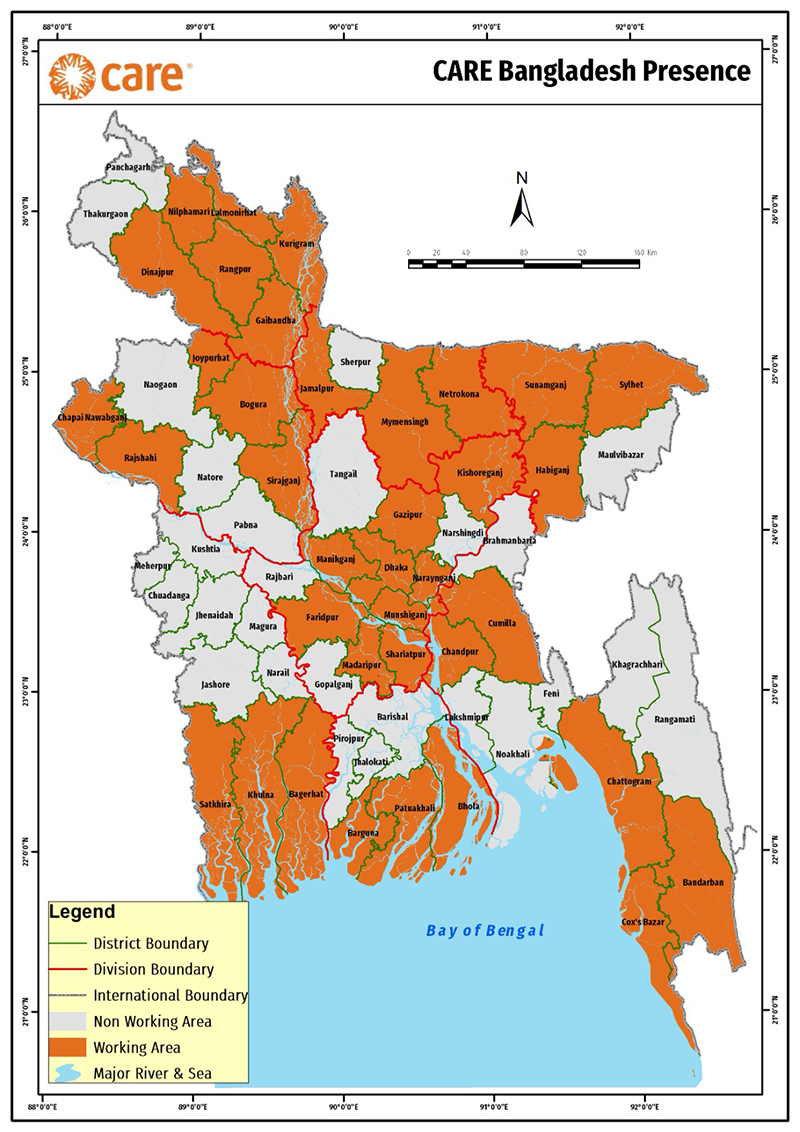



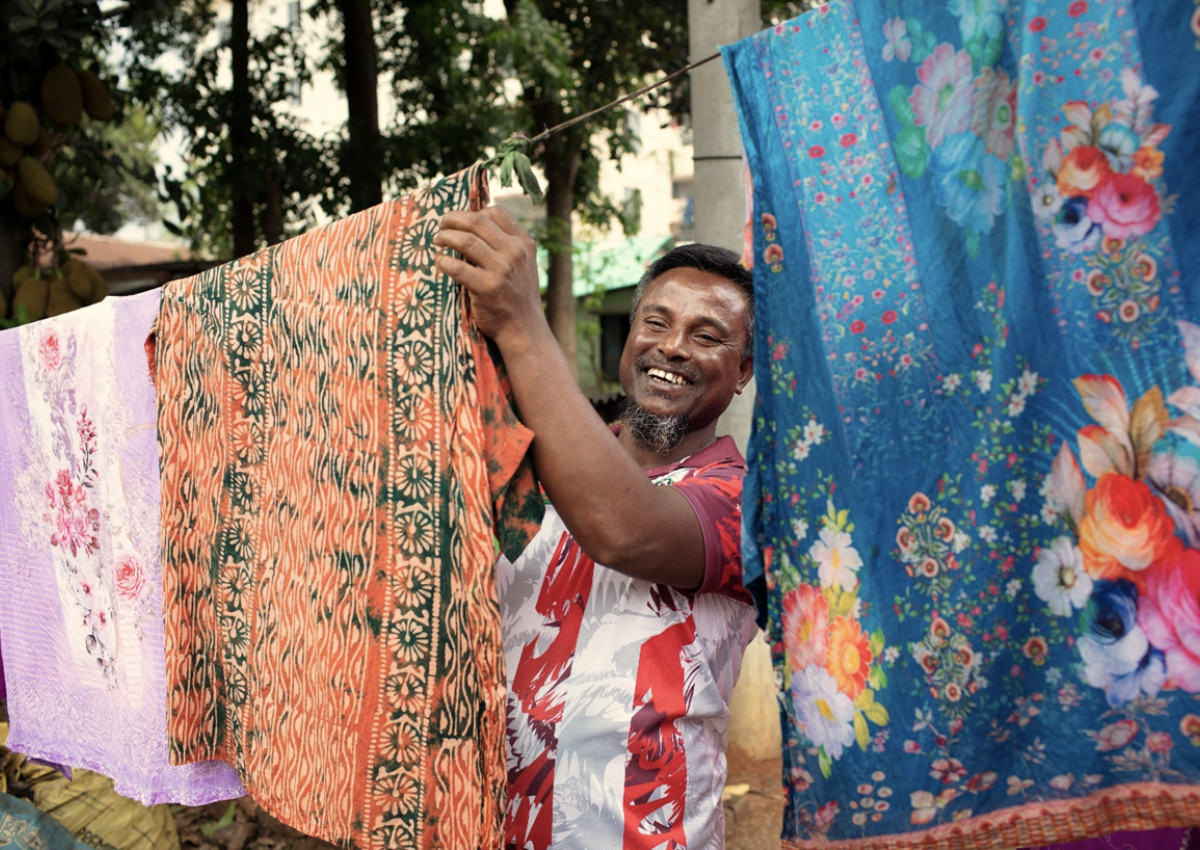
Originally from Shohonati Union in Gauripur Upazila of Mymensingh, 45-year-old Saqlain Mia (Pseudo-name) studied only up to class five. Like many low-income families searching for stability, he moved to Jamirdia with his family nearly nine years ago, hoping life would improve.
 It did not, at first. Saqlain found work as a loader at a nearby factory - demanding, exhausting, and poorly paid. Day after day he carried heavy loads, quietly worrying about how he would secure his family's future.
"As I grew older, I realised my income alone would never be enough to secure our future," Saqlain recalled. "That is when I started thinking differently."
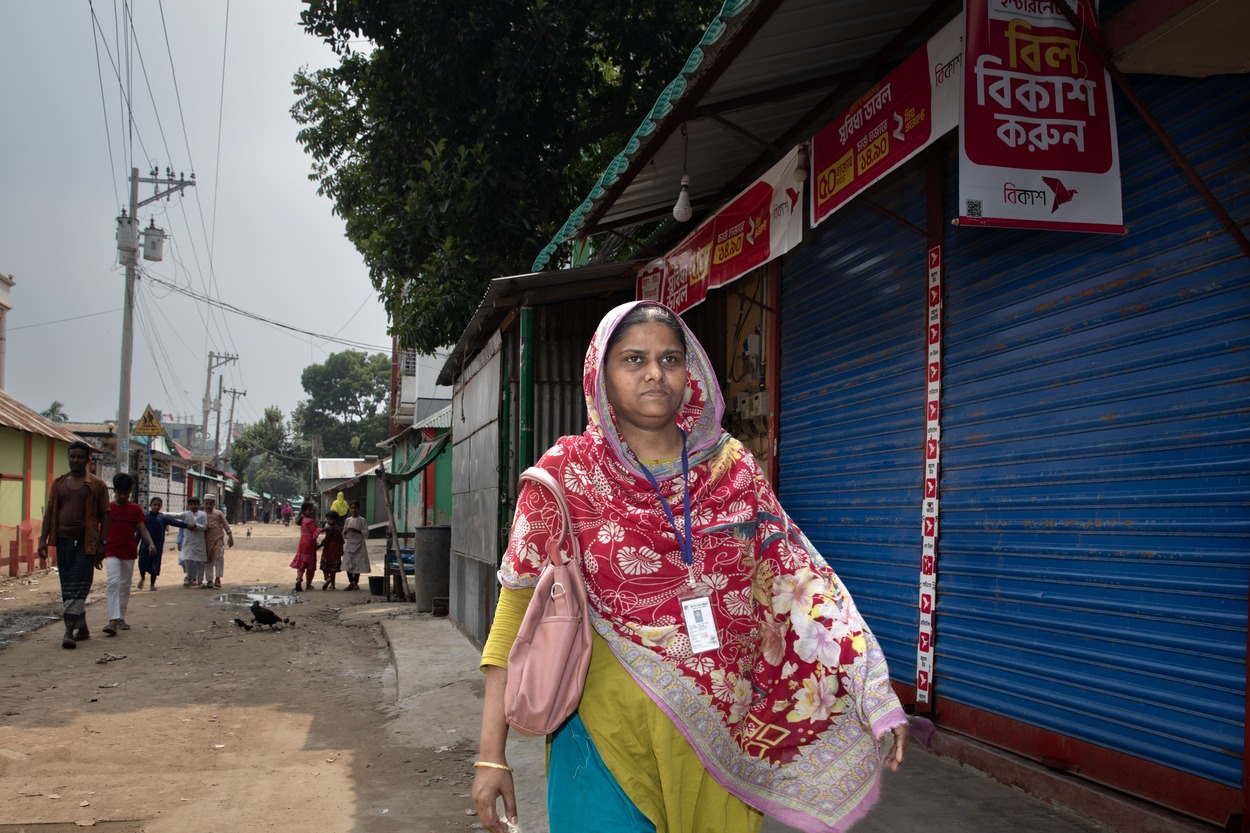 He encouraged his wife, Nurunnahar Begum (Pseudo-name), and their daughters to stand on their own feet. Nurunnahar joined a factory as a sewing operator, and one of their daughters took up work in the finishing section. Together, they began bringing nearly BDT 35,000 into the home each month.
But the family's hardest test was still ahead. After their two daughters, Nurunnahar and Saqlain welcomed a son, now four years old. Many in the community expected Nurunnahar to leave her job and stay home to raise him, as tradition demanded. If she did, the family stood to lose a large part of the income it had only just begun to earn, and risk slipping back into the very hardship it had fought to leave behind.
SAQLAIN CHOSE DIFFERENTLY
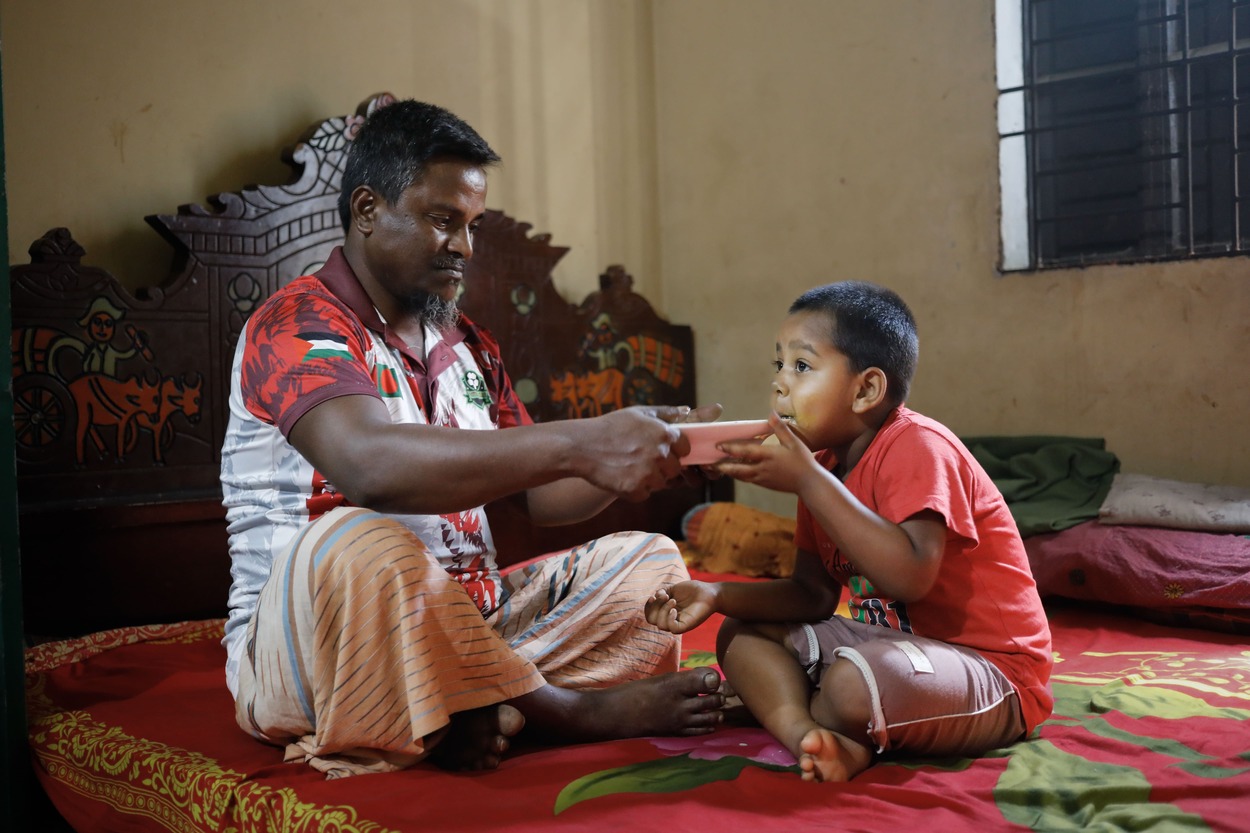
"If I can take care of the home and our son, why should my wife sacrifice her work?" he said.
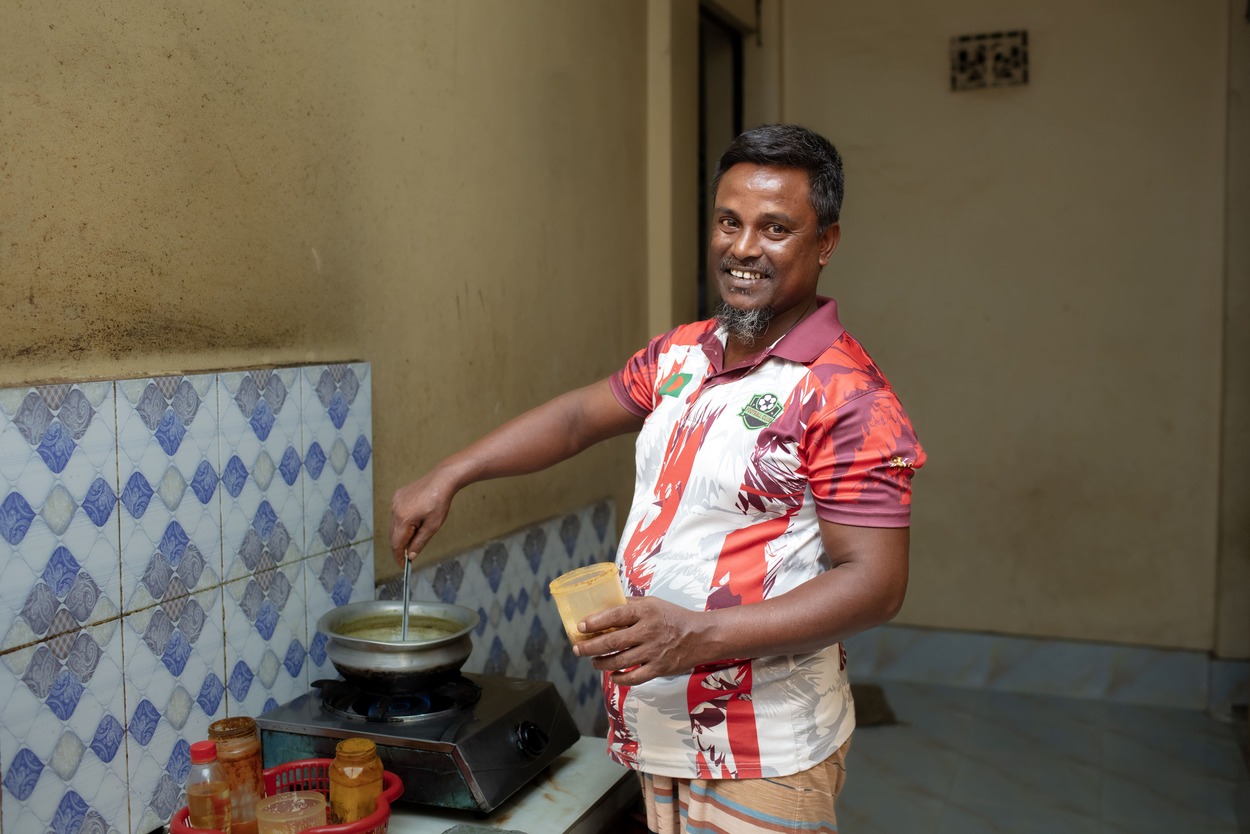
From that moment, Saqlain took on responsibilities so often left only to women: caring for their son, running the household, and supporting his elderly mother alongside, all while still doing daily labour whenever he could. Their understanding deepened further when the couple joined the Couples' Workshop at the Women-Friendly Centre, run under CARE Bangladesh's Oporajita Project, working through shared responsibility, gender roles, communication, and the wellbeing of their family.
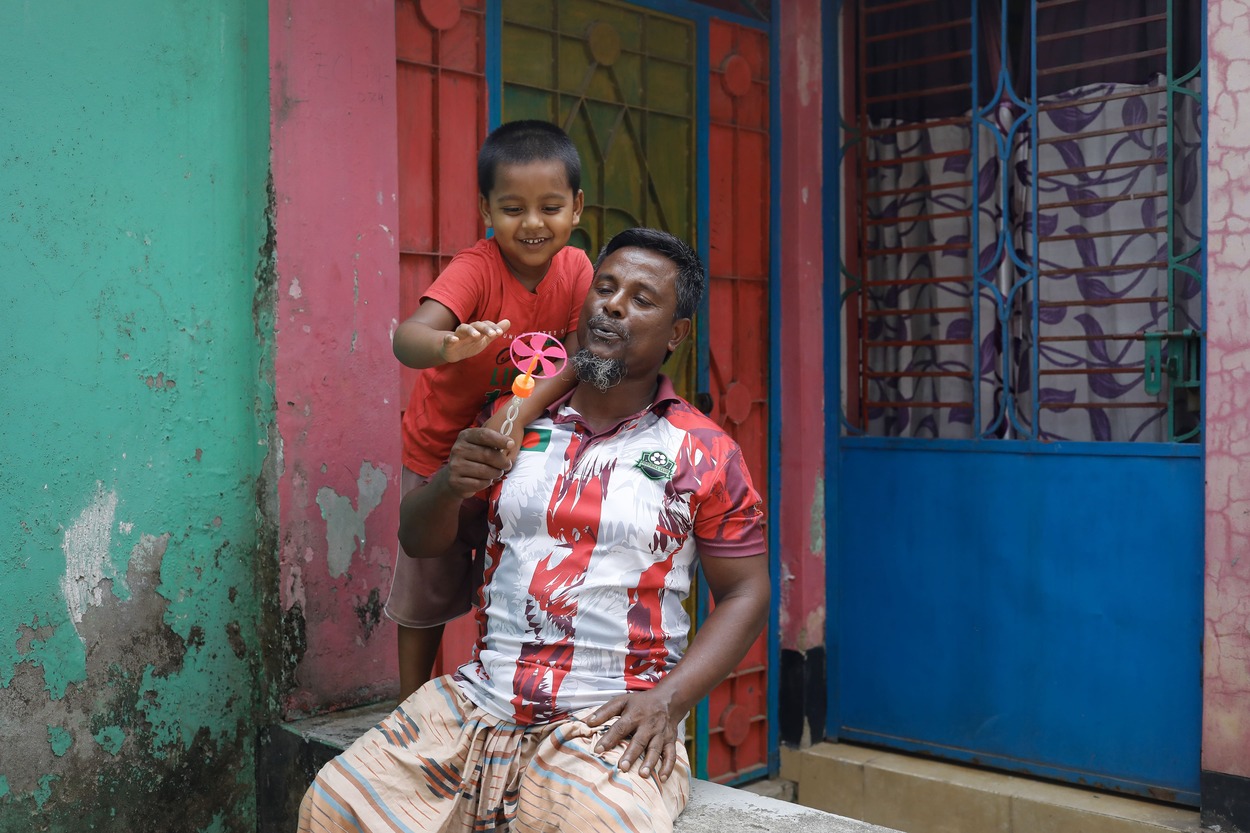 "We understood that peace in a family is not possible when all the responsibilities fall on one person," Nurunnahar shared. "A husband's support at home changes everything."
In a place where housework is seen as a woman's duty alone, Saqlain's choice quietly challenged a long-held norm. Today, before the sun has fully risen over Jamirdia, Saqlain is already at work - not in a field or a factory, but in his own home. He prepares meals, manages the household chores, and looks after their son; when he leaves for daily wage labour, the boy sometimes goes with him. Nurunnahar and her daughter's earnings remain steady, the household runs on shared effort rather than one person's shoulders, and the couple describe a deeper respect between them than before. Balancing childcare, housework, factory shifts, and money worries, the family remains united and hopeful, their life measured not by wealth, but by cooperation, dignity, and resilience.
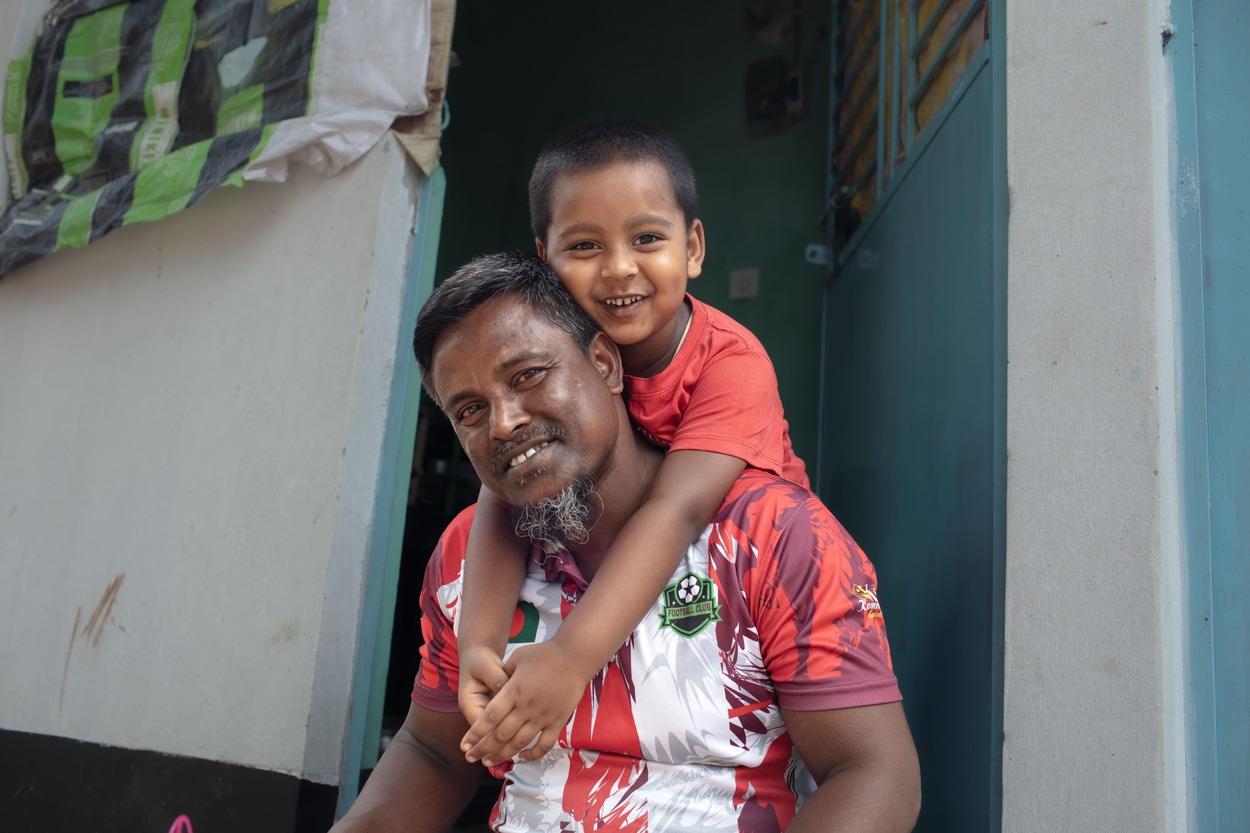
Saqlain's story is a reminder that women's empowerment is not only about women stepping forward - it is also about men stepping beside them. Through shared responsibility, and with support from initiatives like CARE Bangladesh's Oporajita Project, families like his are quietly reshaping their community and building a more equal sky for the next generation.