





On World Menstrual Hygiene Day, we must remember that #dignity means more than food and shelter. It means a girl has a safe place to go, something to use, and the knowledge to use it. 
She didn't know what was happening to her body.
Like most girls in the camps, Noor Begum learned about menstruation from her mother, and only after it had already begun. What she received wasn't really knowledge, it was a list of things she could no longer do. Don't go outside. Don't touch food. Don't talk about it.
This is the quiet reality for hundreds of thousands of women and girls across the 33 refugee camps in Cox's Bazar. Over 85,000 girls between 12 and 17, and more than 286,000 adult women, call these camps home. 60% face active restrictions during their periods. Nearly 39% struggle to manage menstrual hygiene at all, with soap and sanitary supplies simply out of reach. For years, the #humanitarian infrastructure barely acknowledged this gap.
That's what CARE Bangladesh set out to change.
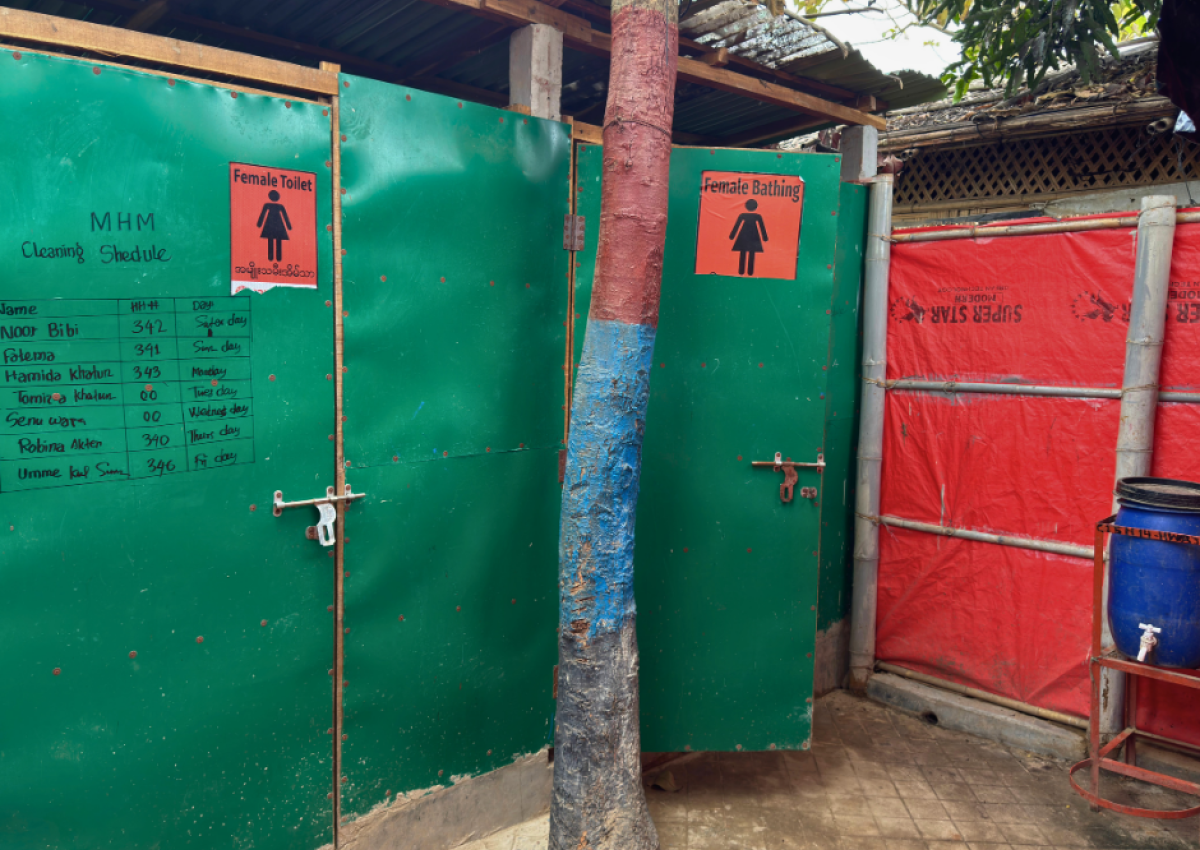
Under the SURGE Project, CARE Bangladesh constructed 20 dedicated Menstrual Hygiene Management (MHM) blocks at Camp 15, built at locations chosen by listening to the #women themselves. Solar lighting was installed nearby, so safety doesn't end at sundown. Around 4,000 women and #girls also received #awareness sessions covering practical, often never-before-shared #knowledge.
"During menstruation, we lose blood from our bodies, and that can only be filled by taking #nutritious food," said Somima, an adolescent girl from the camp. For Noor Begum, the shift was equally tangible: "Pads must be changed at 4-hour intervals, washed with clean water and soap, dried in the sunshine, and kept in a clean place."
Simple information. But for #communities where nearly 72% of girls had no knowledge of #menstruation before it happened to them, it is life-changing.
CARE Bangladesh, through the SURGE Project, and more, remains committed to inclusive, gender-responsive humanitarian action that sees the full humanity of every person it serves.